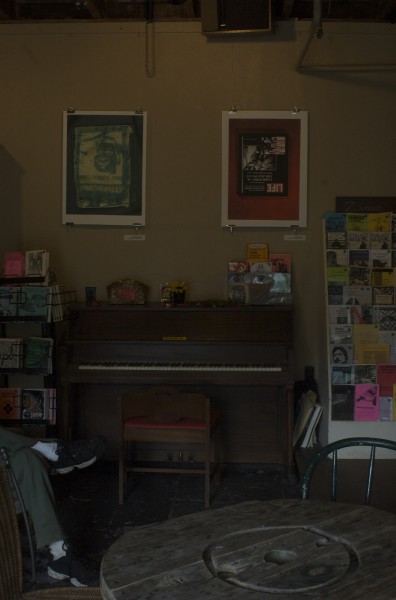
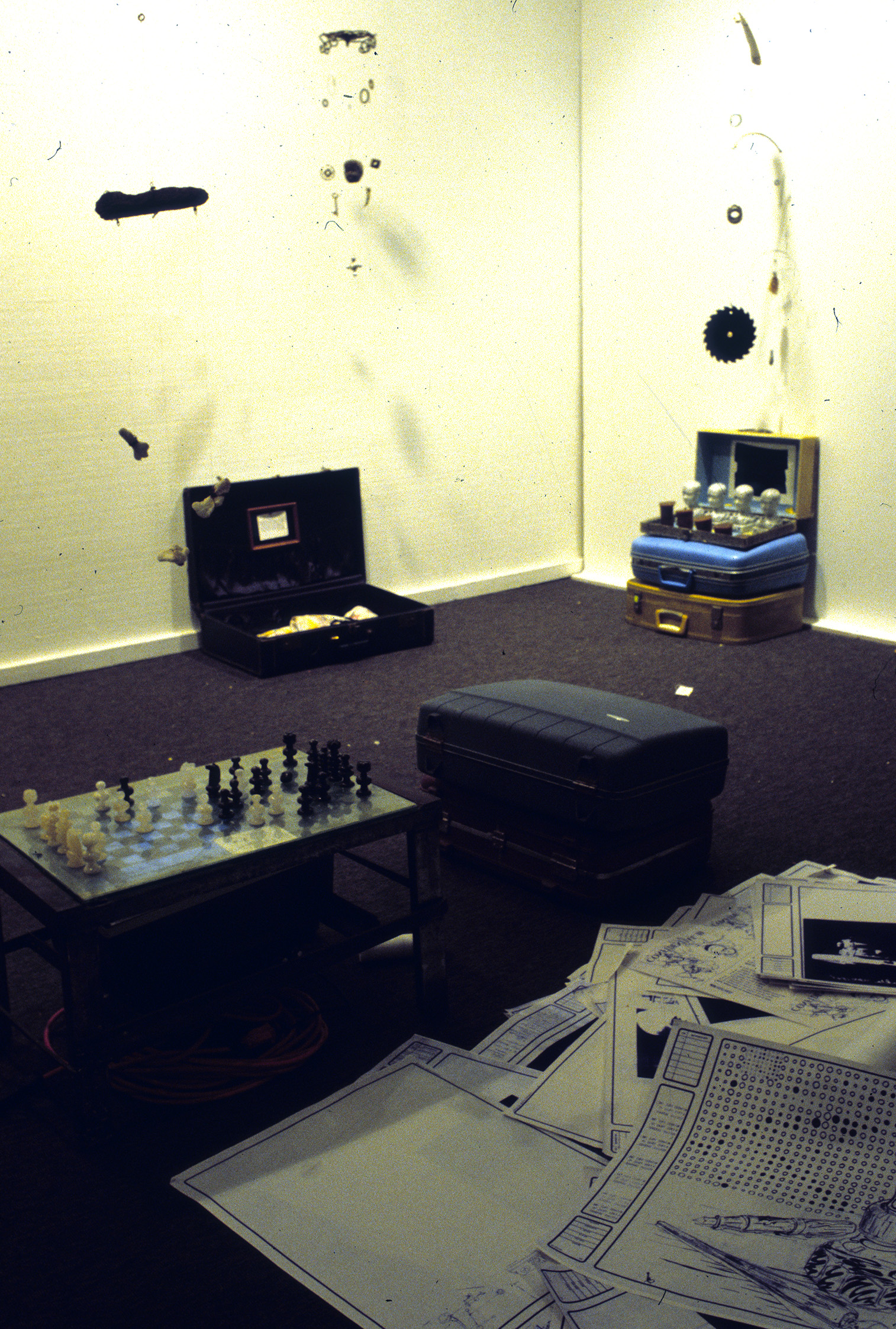
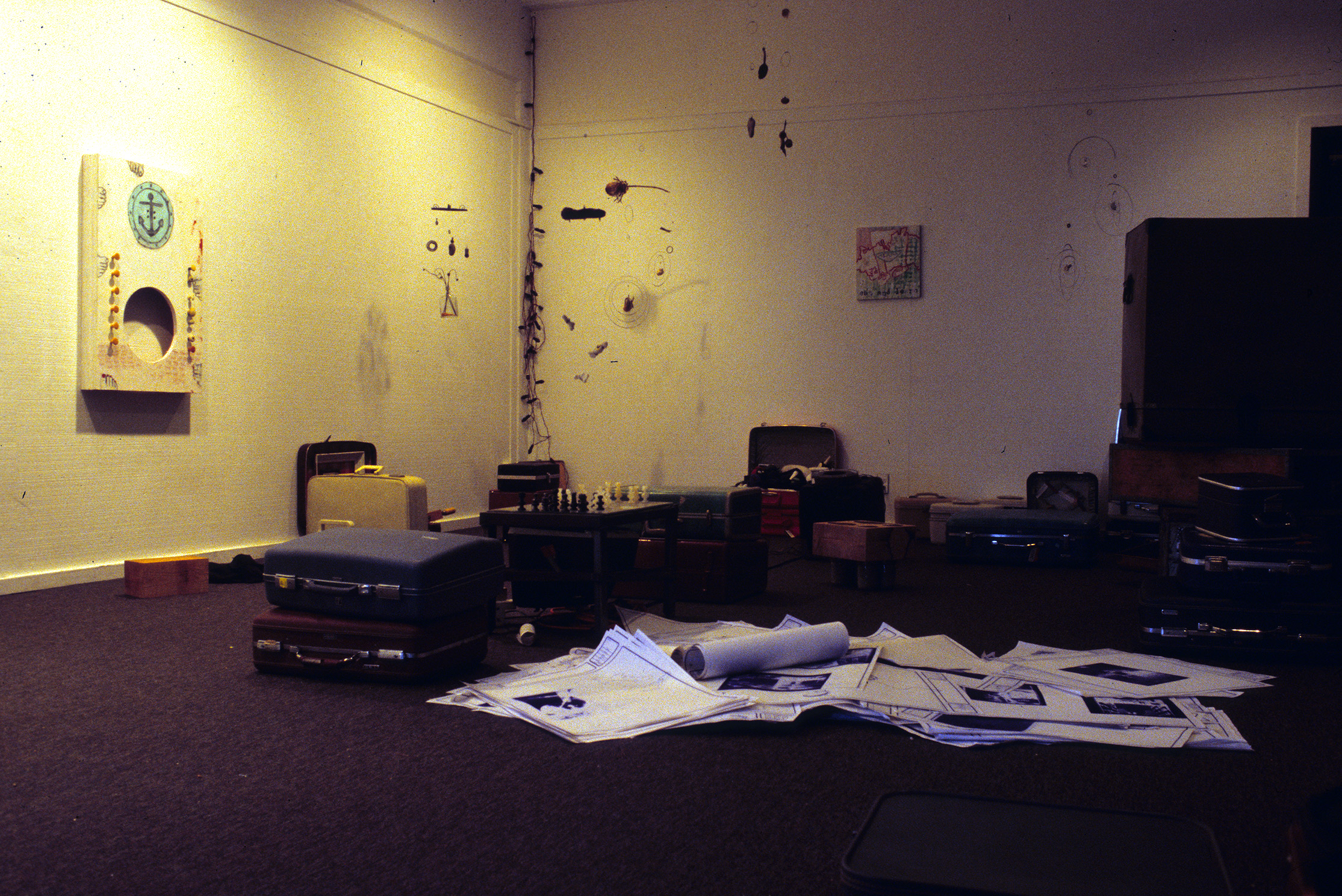
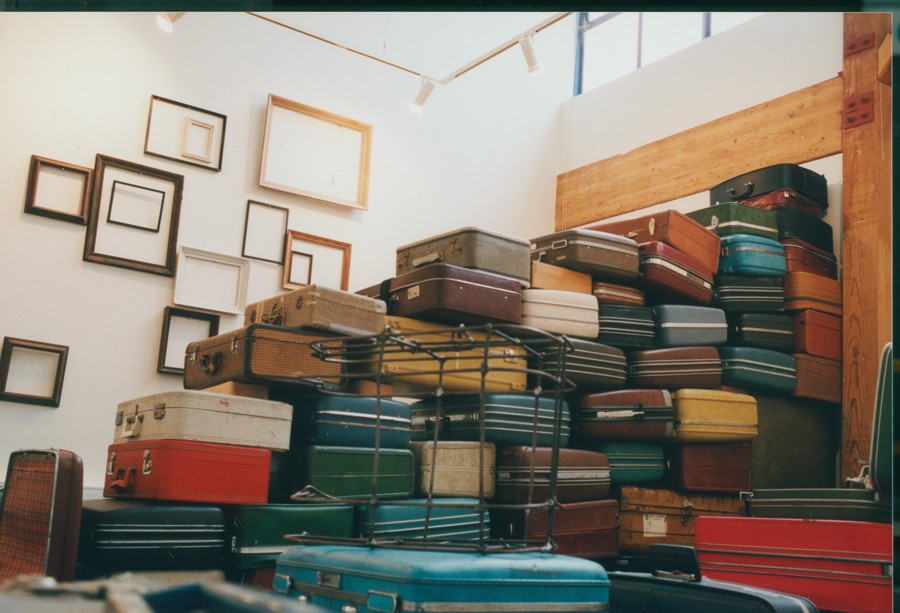
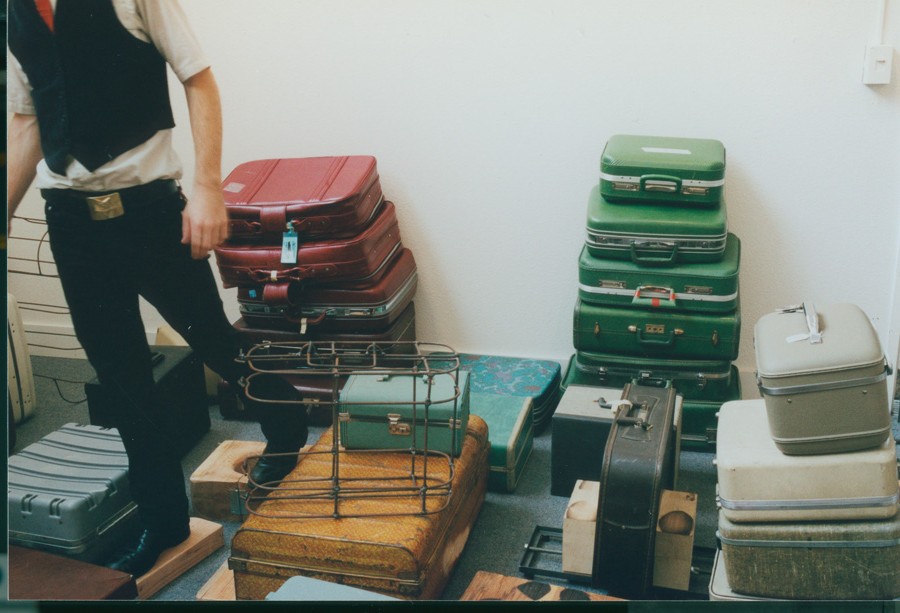
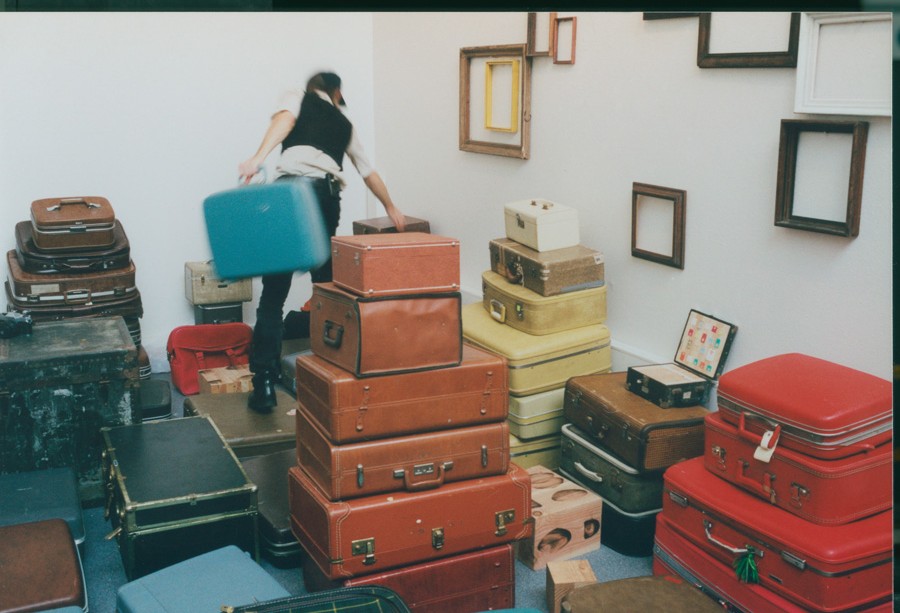
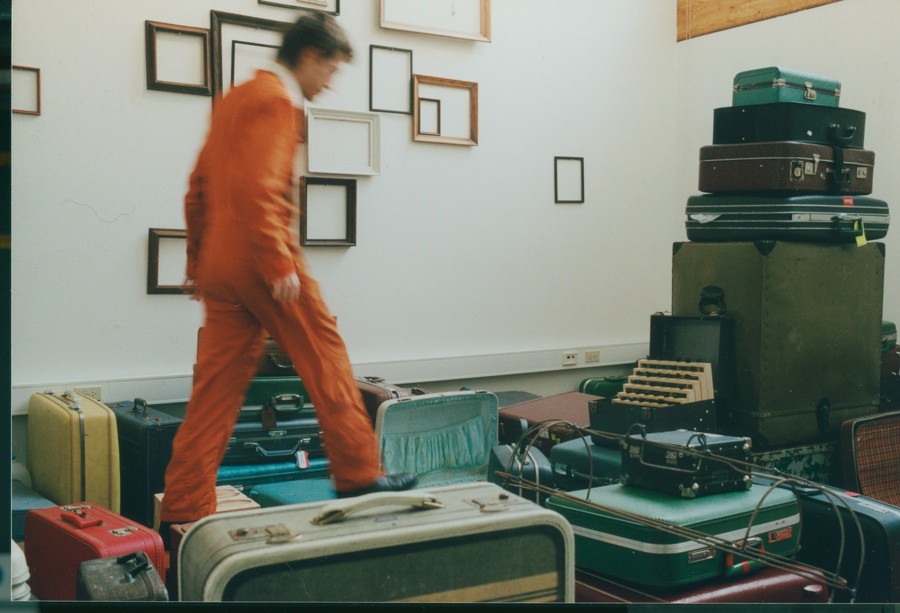
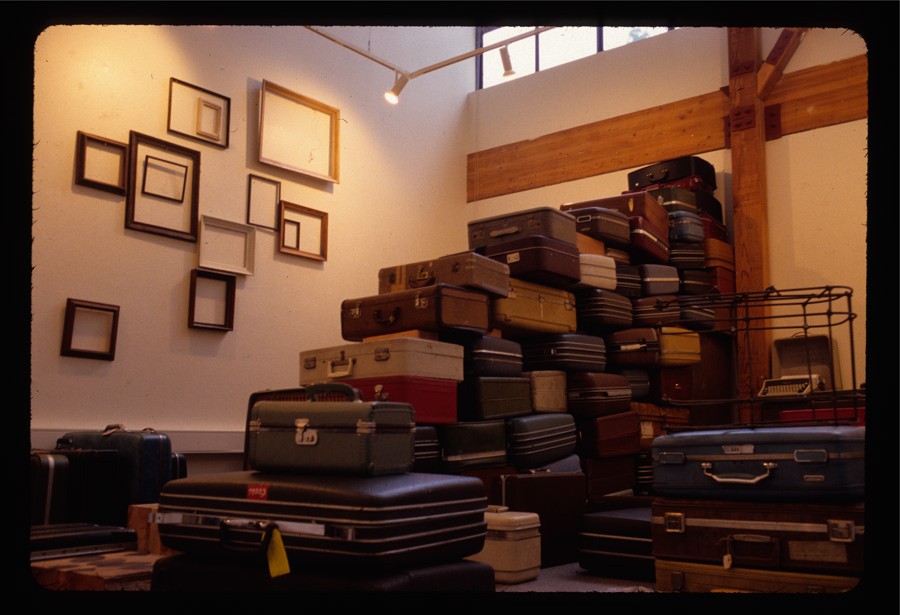
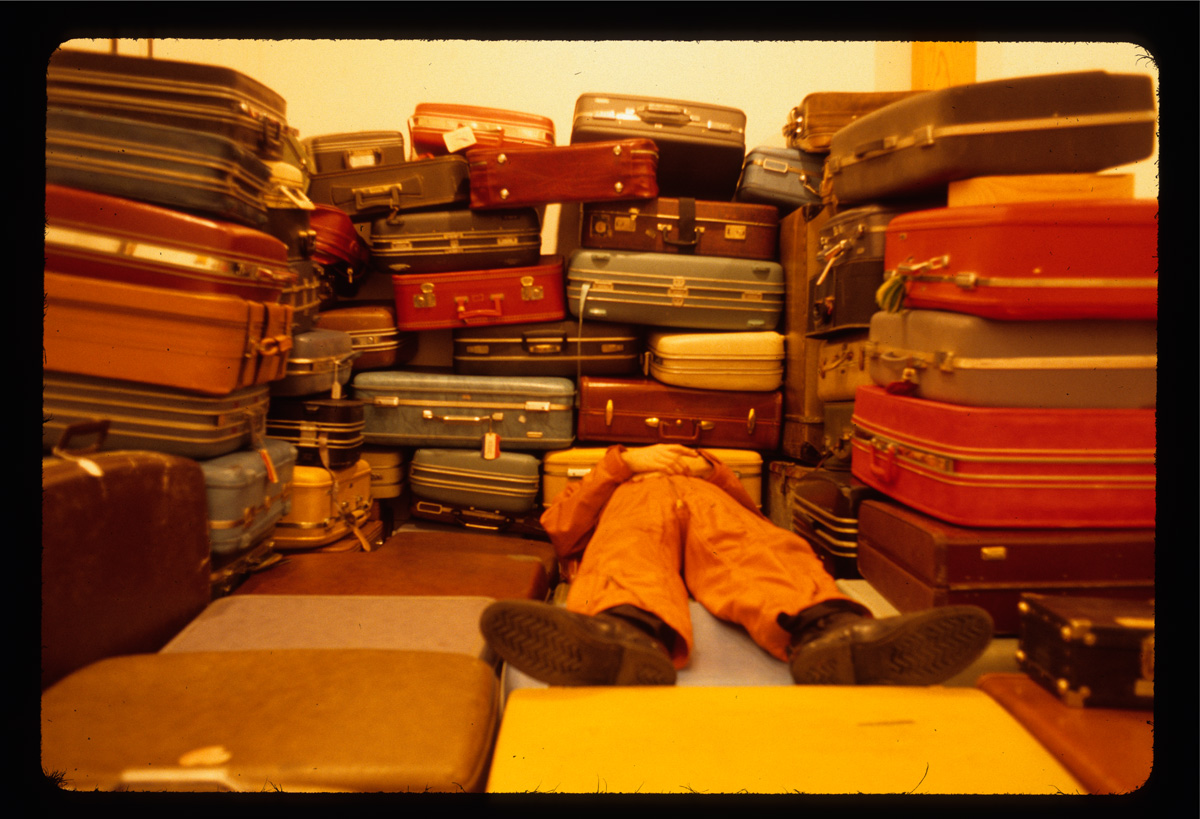
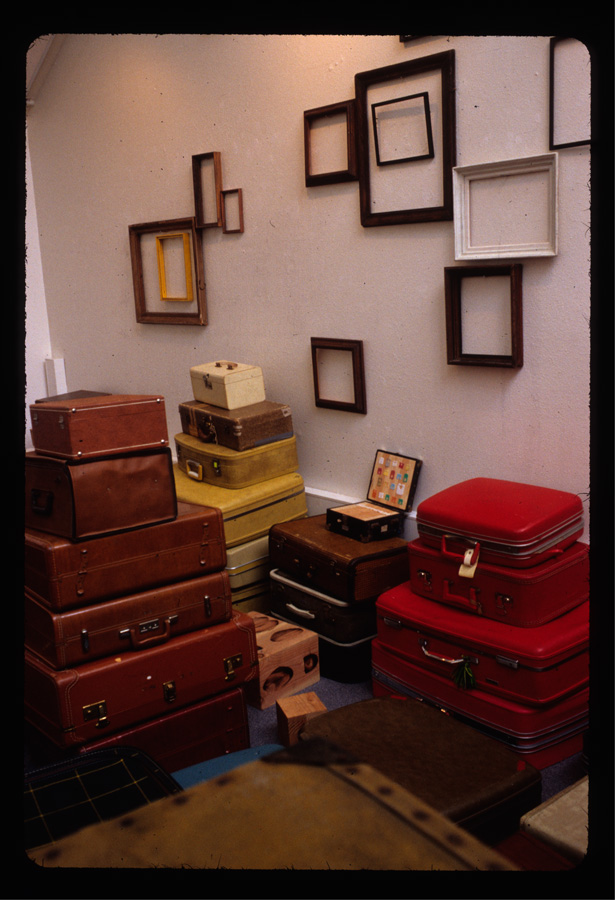
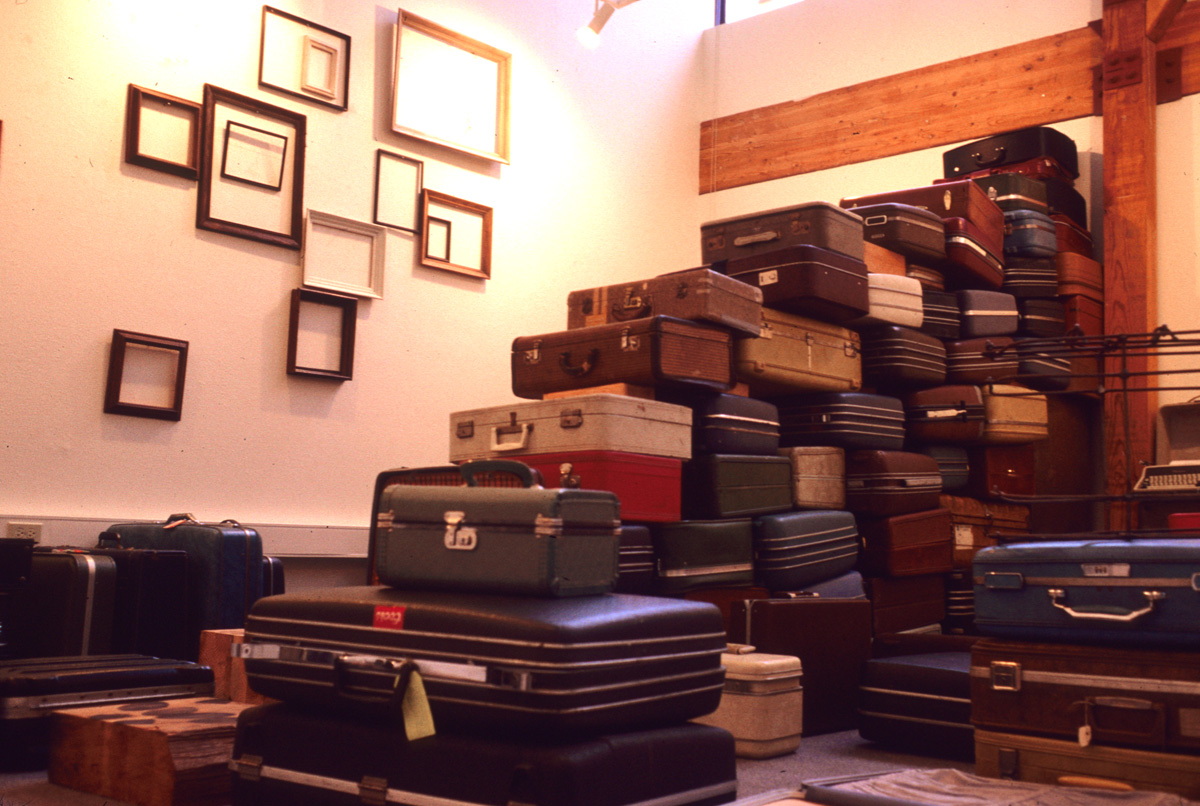
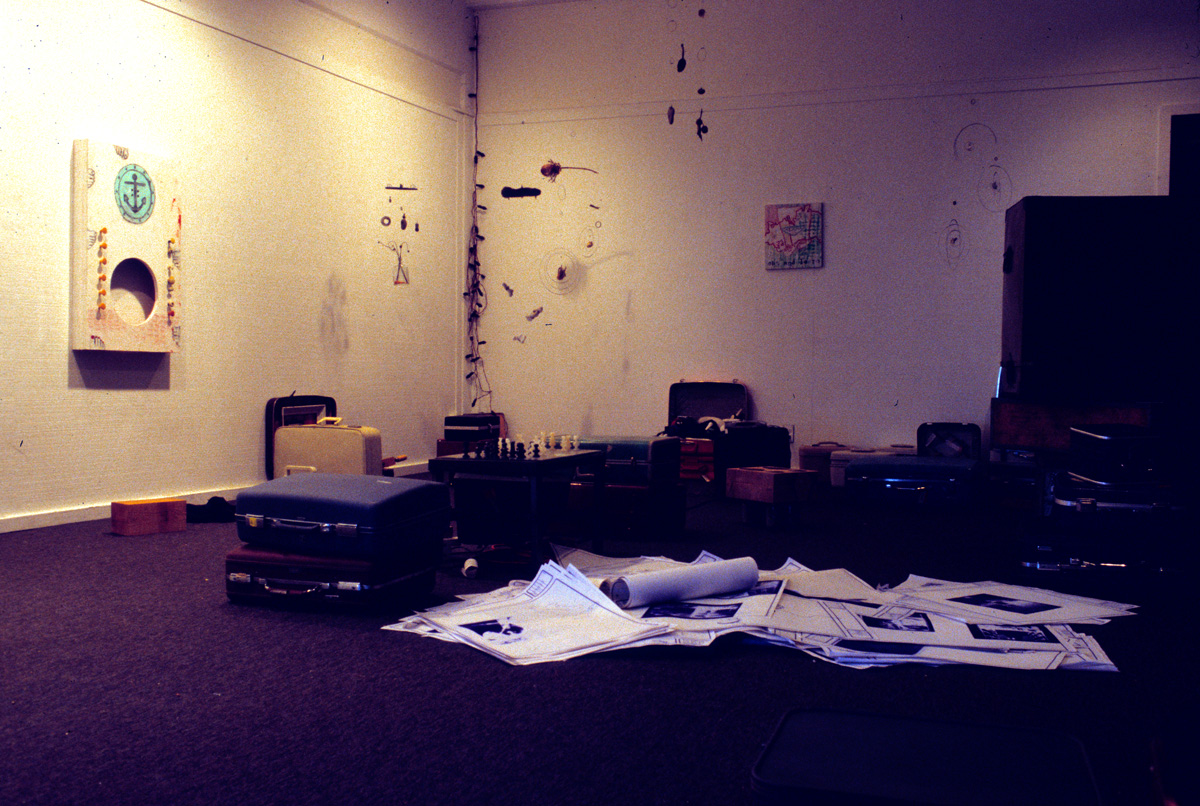
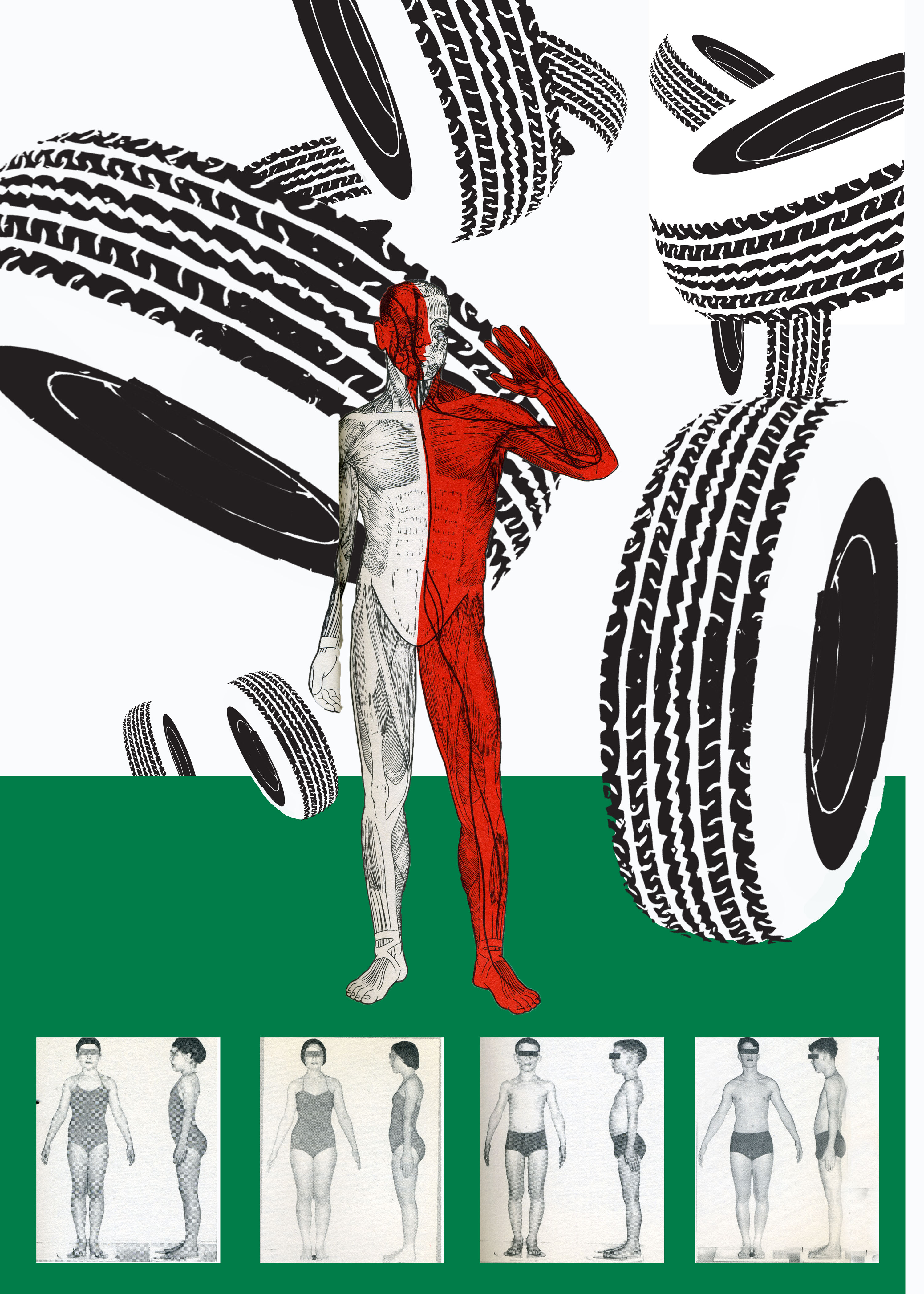
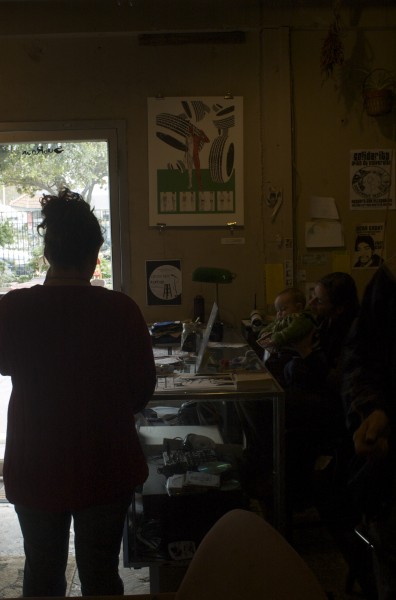
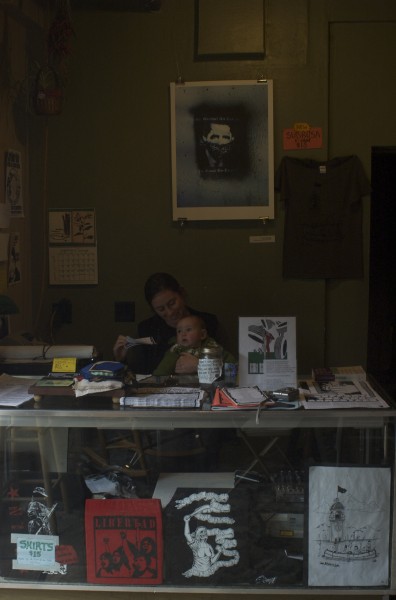
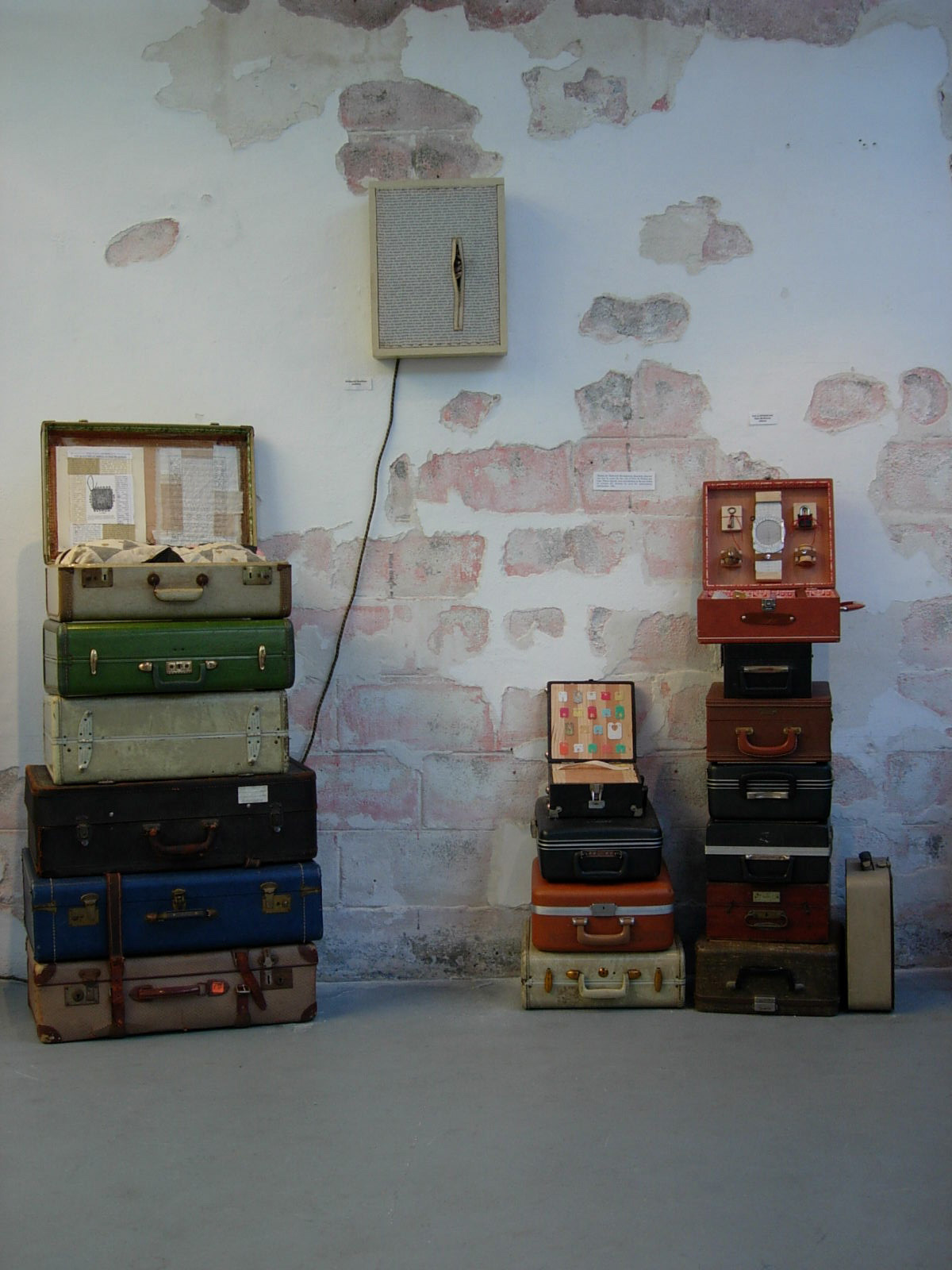
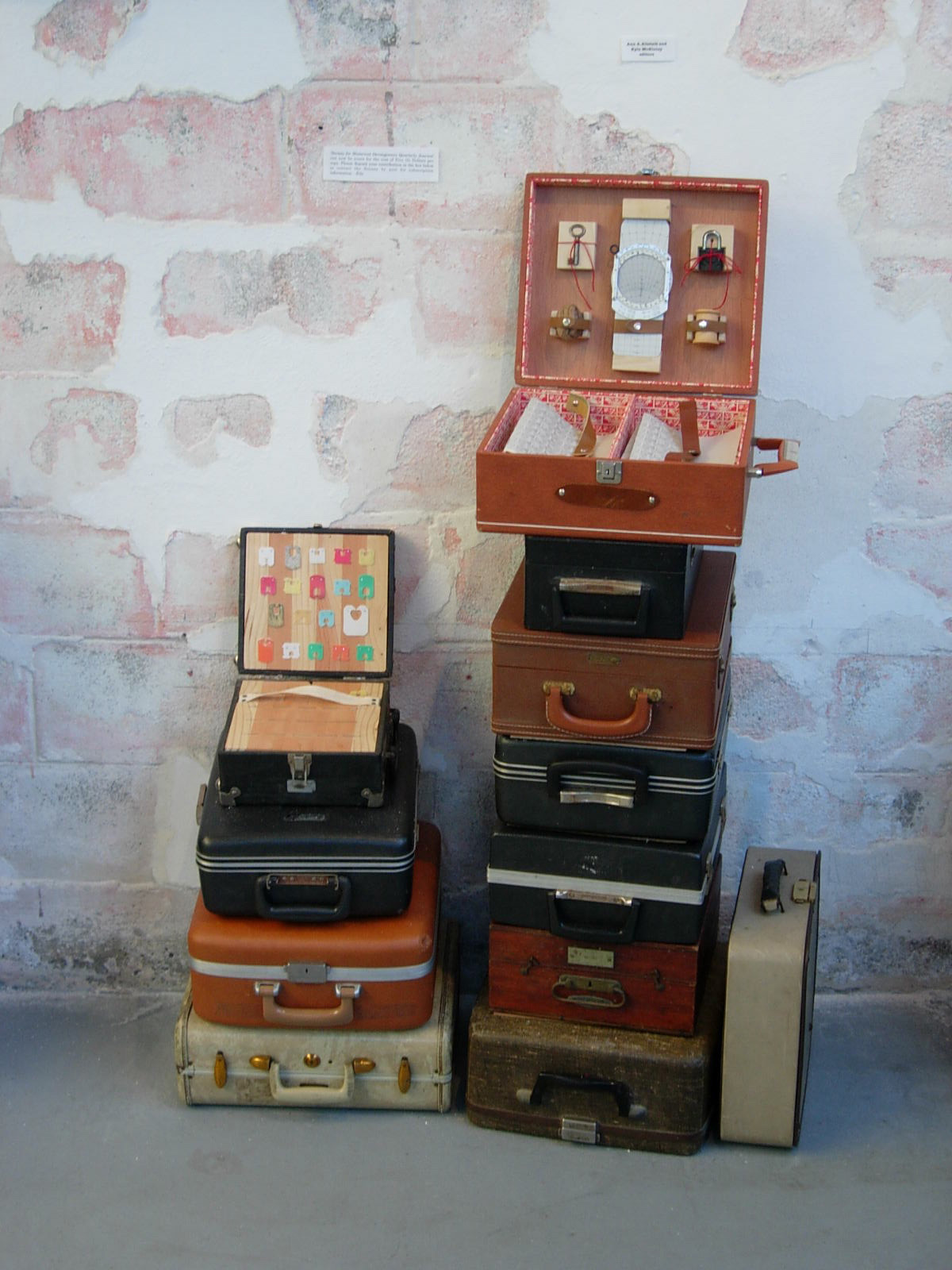
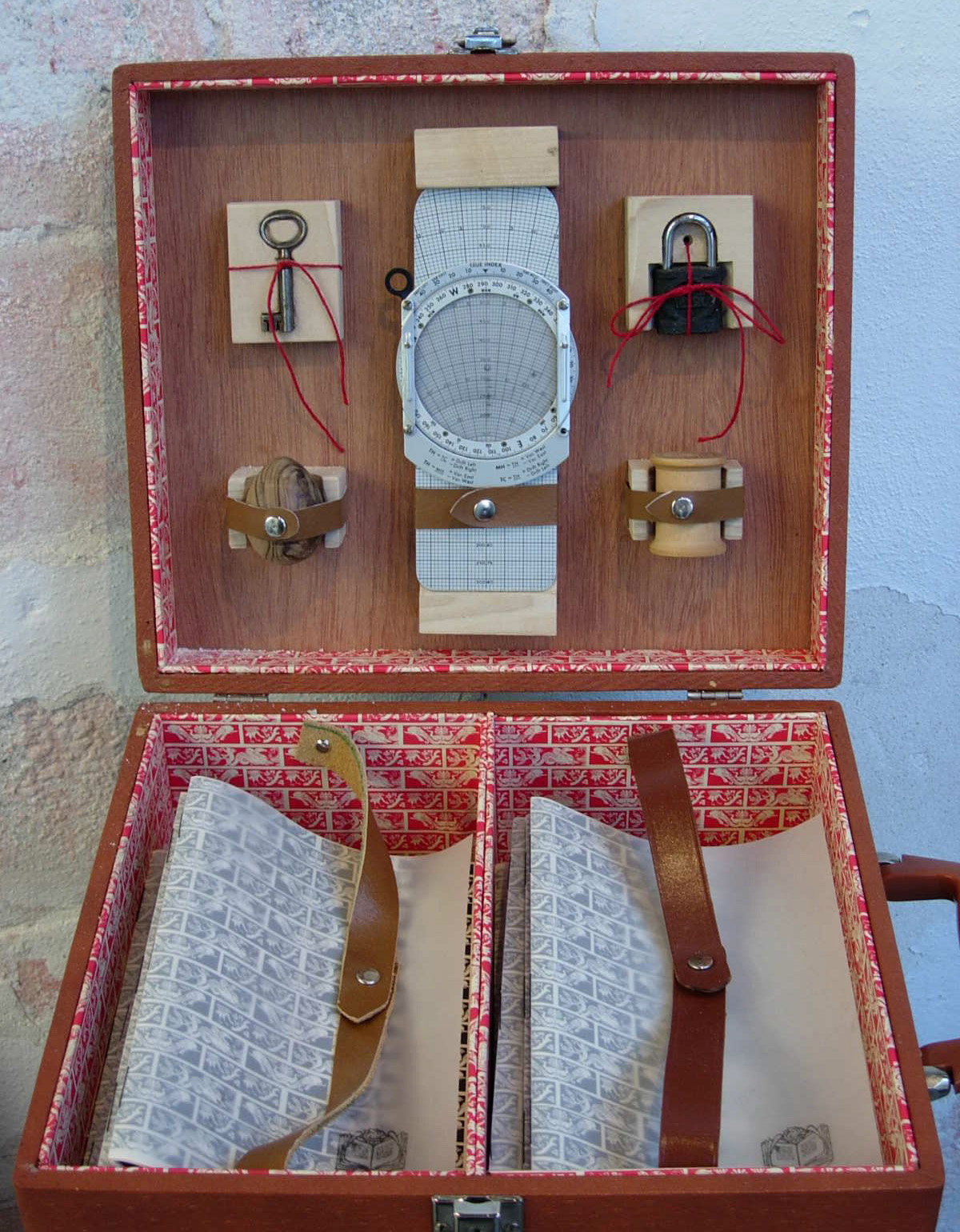
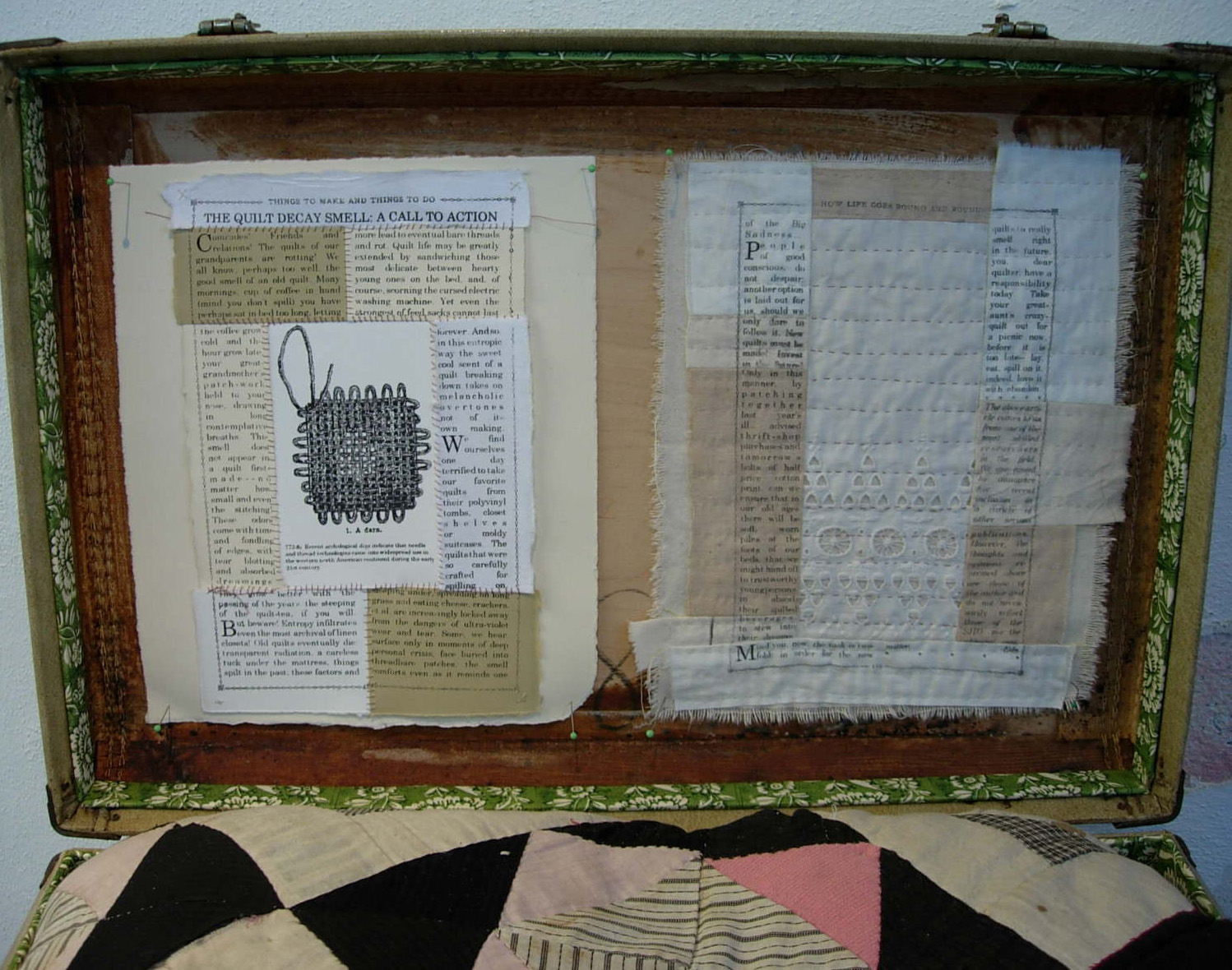
I presented my recent experiments with digital printmaking as a fundraiser for the newly opened SubRosa Infoshop and Freespace in January and February. Following is my artist’s statement and documentation of the prints in situ, plus selections of the images themselves.
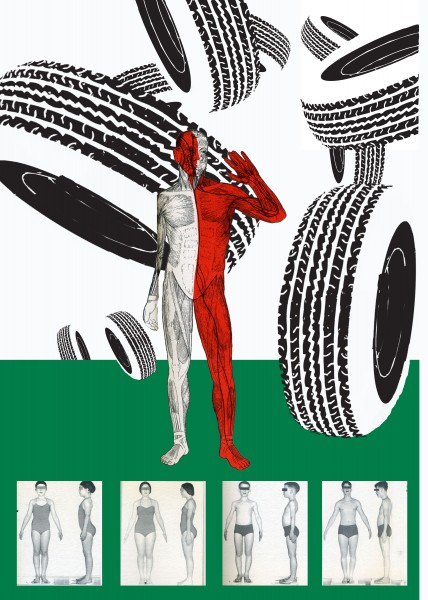
artist’s statement:
The following text is a digital print. Having been rendered first in my head, it came out through my hands, spilling onto a keyboard in analog time; there it went into a computer, where it acquired the distinctly digital character that you, know doubt, sensed from it before you could so much as smell or touch the paper. Today you hold it in your hands as an analog object, in our quotidian analog world. Tomorrow it may resurface on a blog or in a digital photograph.
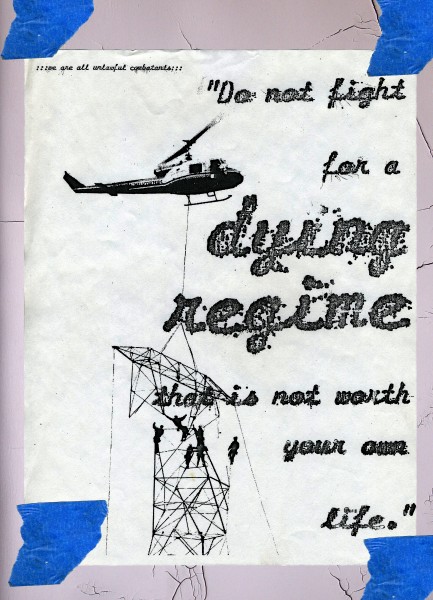
This particular digital print is part of a series of digital prints that I have made to display at Sub Rosa Info Shop in Santa Cruz, California. The other digital prints are, notably, “artworks,” which is to say, they are printed on fancy paper, and hang on walls. Those prints surfaced, initially, in our analog world too; they too were digitized (altering their character, structuring their meanings), and now reappear, changed, back on the walls of our quotidian analog world.
The prints on the wall are not different from the prints in your hands. One does not explain while the other preforms, and neither is imagined to speak with authority nor originality. These prints (all of them, this one too) are imagined to function as questions, not as answers.
The text that you hold in your hands is not knowledge: you are the knowledge and you know what to do with it. Rather, what you are holding is information. Information may be presented as the ones and zeros of circuitry. Or it may take an analog form such as the prints on the walls. Here is information that I hope to present as stories. Or maybe it is one story. It’s hard to tell.
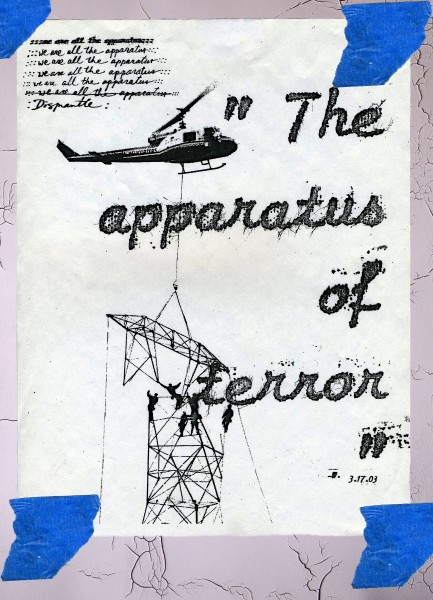
The Story of the Indesirables
During April and May of 1968, in and around Paris, France, students and workers began to mobilize with a clear goal: to “demand the impossible.” What came of this mobilization (the riots, the barricades, moments of autonomy, moments of betrayal) and their aftermath, is widely enough known, and has been told as too many too romantic tales all too often; for each of those innumerable stories there are two or more, supposedly independent, political theories of what happened and why. I will refrain from recapitulating here.
Less often told (at least, somewhat less often) is the story of one particular thread of thought that ran through the event of spring of 1968. That thread is related to questions of appropriation and recuperation of visual cultures that emerge out of specific, and charged, political encounter. Though this thread might be said to find its origins in the writings and practices of Guy Debord and the Situationist International, and has certainly spun itself into a veritable rope of critical (and sometimes highly uncritical) thought within anarcho-punk and DiY communities, there is at least one moment of those struggles, of Paris ’68, that is of particular usefulness to us as a story.
In the days of the Paris riots, the government of France did what governments always do in times of crisis: they sought out a scapegoat. The government thought that they had found the perfect scapegoat in the person of one Daniel Cohn-Bendit, and immediately set to work putting the blame for the mounting unrest squarely on his lonely shoulders. Cohn-Bendit was, in fact, active in organizing students at local universities, and was known as an eloquent and impassioned speaker. He was so impassioned that the French Communist Party (which shared a great deal of power in the government) rather feared him: the secretary of the Party referred to Cohn-Bendit as “a German Jew” in an attempt to discredit him. From the state’s perspective, he was an attractive scapegoat largely because he was an easy target. With the help of the press, the government labeled Cohn-Bendit “an undesirable.” On May 22nd, Cohn-Bendit was expelled from France.
The next day, the atelier populaire numéro un (“popular workshop number one”) of the École Nationale Supérieure des Beaux-Arts had printed a poster supporting Cohn-Bendit (two seperate ones, actually, due to disputes about what the text should say). These posters were glued to walls all around Paris’s latin quarter, and made a particularly important presence during that day’s demonstrations.
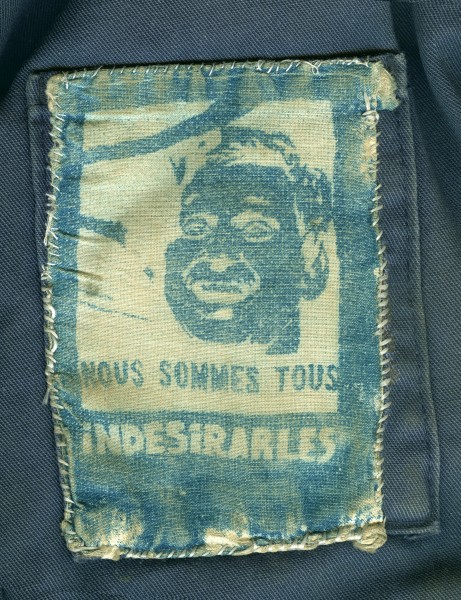
It is worth noting that both the image and the language of the Cohn-Bendit poster were appropriated from the press. The image is drawn from a photograph of Cohn-Bendit taken by reporter Gilles Caron (if you look carefully you can see that the image is being taken from behind the shoulder of a riot-cop). And the text, now quite famous, was a reversal of the government’s own accusation against Cohn-Bendit: “Nous Sommes Tous Indesirables” (“We are all Undesirables”).
This strategy, of appropriating the symbols and idioms of the dominant culture to achieve radical ends, is what the Situationists called “détournement.” The atelier populaires printed dozens of other posters during the events of May and early June. For better or for worse, certain of these images have come to function as the stand-ins the social unrest itself. Despite the intentions of the printers that these images be made solely for the purposes of political demonstrations, these images escaped the context of May ’68, and were reconstituted as “artworks.” Posters that had not been glued to walls immediately became valuable as decorations, and then, as Art.
This is the story, then, of one piece of paper, appropriated from an art academe, made into a signifier of a particular social relationship (rejecting the state’s attempt to scapegoat Cohn-Bendit) and then re-commodified as Art. In 1969 a book appeared that collected a lot of the posters with writings from the screenmakers of the atelier populaire (now reconstituted as “artists”). Nearly all subsequent books on the subject cite that text as authoritative.
This strategy, of the dominant culture appropriating the symbols and idioms of radicals, is what the Situationists called “recuperation.”
In 1997, when I was 17, I guess, I stumbled across a website with little digital reproductions of the posters from the atelier populaire. The image quality on the internet in the late 1990s left a lot to be desired, and certainly nothing of the history of the image—nor its particular role in a social struggle—came through to me. Needless to say, I thought they were really fucking cool.
Really “punk rock,” quite frankly.
I made little digital prints of all of them, and glued those to little art projects and ‘zines and such that I made at that time. And one of them, the one that said, “Nous sommes tous indesirables” I re-copied onto a transparency and made into a cyanotype print. This little print on canvas I sewed to the arm of the jacket that I wore at that time. I continued to wear that jacket for many years: when you look at the print of it on the wall here, those years of wear and tear are all the more visible for it’s gigantic reproduction.
The Story of the Intricate Ritual
In that same year of 1968, in the United States, there were also a lot of things going on. Remembered in the televised historical consciousness common to most Americans, 1968 was the year of the Tet offensive, Soviet tanks rolling into Prague, and the black power salute from the Olympic podium in Mexico City. It was also the year that both Martin Luther King and Robert Kennedy were assassinated.
In late August of that year the Democratic National Party held their presidential nominating convention in Chicago. Given the general context of popular opposition to the war in Viet Nam (which was increasingly identified with President Johnson’s Democratic Party), the rise of the new left and hippie movements in the US, and the global uprisings of 1968, it was something of a given that shit was going to happen at that convention.
Still, Abbie Hoffman and the Yippies did an excellent job of convincing the world that shit was going to happen, largely through careful manipulation of press coverage. Hoffman claimed, for example, that hundreds of thousands of protestors plan on attending the “Festival of Life” concert/ demonstrations during the convention. The Yippies produced a slew of media stunts for the event, the most famous of which being the nomination of Pigusus (a domestic pig) for president.
The response of Chicago’s Mayor Daly was adamant that the convention would not be disrupted by a bunch of pot-smoking radicals. So he brought in 23,000 riot cops and national guards. Only about 10,000 people actually showed up to the Yippie event, which meant that the cops massively out numbered them. Once the events got going the cops became extremely violent. Tear gas and mace were used so indiscriminately that candidate Hubert Humphrey had difficulty breathing inside his hotel room. Finally, during the actual nominating speeches, the protestors managed to advance to near the convention center. There, under the glaring lights of TV crews, the Chicago cops beat dozens, if not hundreds of people senseless. Protestors chanted, “the whole world is watching.” And it was true.
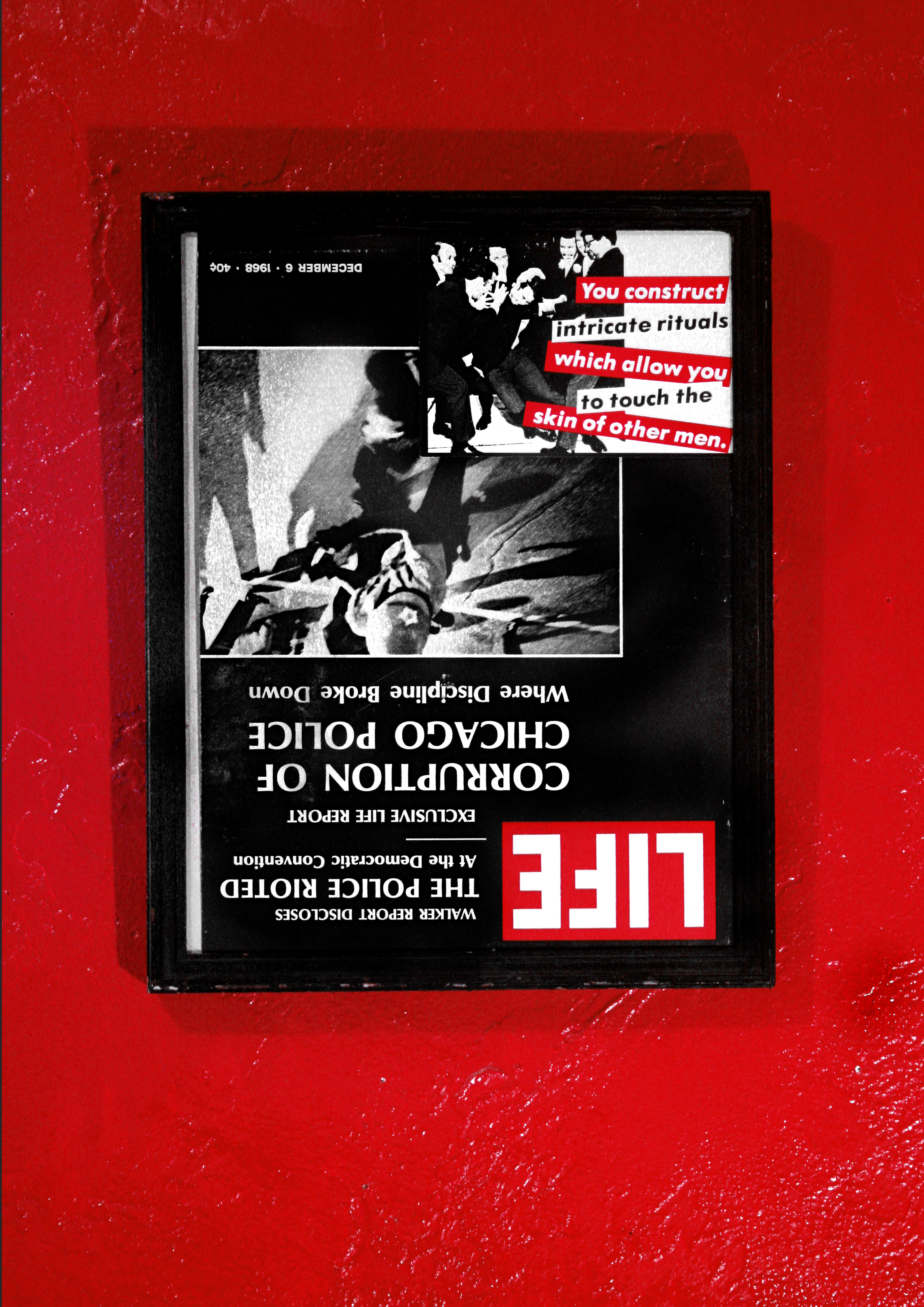
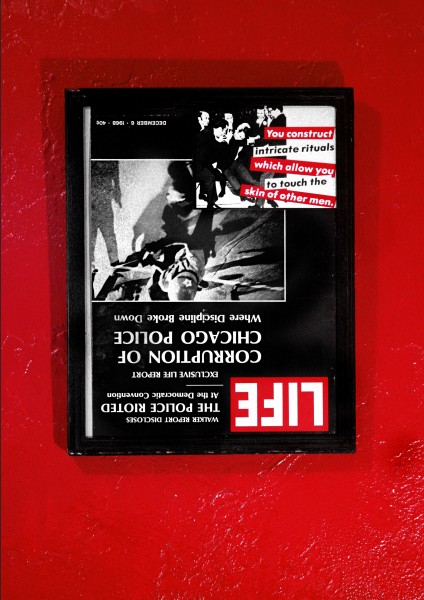
Four months later, in December 1968, the cover of Life Magazine featured a photograph from that night to accompany a story about the release of the Walker Report. The Congress’s “Walker Commission” found that he Chicago police had indeed used excessive force. The report characterizes the events as “the police rioted.”
Recently, some ten million images from the Life Magazine archive were digitized and are now hosted by Google Images. Interestingly, the cover from December 6th, 1968 is not to be found, anywhere.
The other image that appears in this print is a postcard of a Barbara Kruger piece. The formal connections are obvious enough. Though the red, black and white color scheme that has come to be synonymous with Kruger is generally read as her appropriation of the aesthetics of Russian Constructivists, Agit Prop artists and Bauhaus designers, it might as easily be read as a reference to the decades of Life Magazine covers that pervade American visual culture.
Kruger speaks frequently about appropriation and recuperation in the context of her artworks, and is known for having made détournement accessible to the masses (pro-feminist high-art “masses” at least). The text on the Kruger postcard reads, “you create intricate rituals that allow you to touch the skin of other men.”
Without putting to fine a point on it, is that not exactly what the cops did in Chicago in ’68? Faced with a ecstatic and utopian protest movement that aimed to not merely disrupt a honored tradition of American political life, but, ultimately, to spark a cultural revolution that would undermine American society generally, the police created an intricate ritual.
Faced with a hippies that attempted to undermine traditional gender norms and create a culture of “free love,” the police created an intricate ritual that allowed them to touch the skin of other men. Faced with a political riot, the police created an intricate ritual that allowed them to participate in the riot in the only way they knew how. With their nightsticks.
The Story of “No State, Oh-Eight”
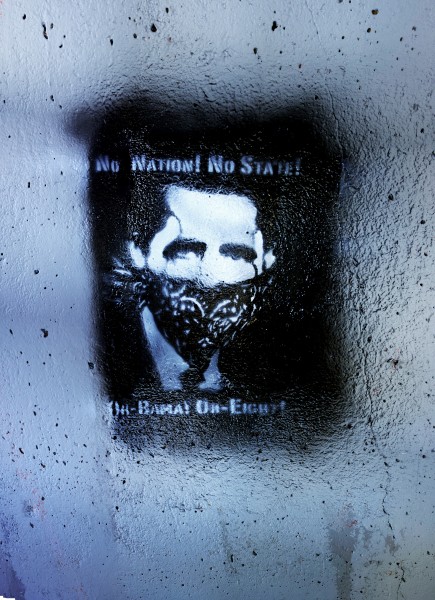
In the case of a piece entitled “No State, Oh-Eight,” a number of these themes coalesce into one image. In the digital print we see a high-resolution reproduction of a spray-painted stencil on a concrete wall. The image in the stencil appears to depict Barack Obama wearing a bandana over the lower half of his face. The image is accompanied by the text, “No Nation! No State! Oh-Bama! Oh-Eight!”
Interpretations of this image may be numerous, and I would certainly refrain from speaking with any authority as to the, uh, “intentions” of the artist. I will confine my remarks to the exploring the context of how this image functions, and avoid questions of what it means.
It must first be pointed out that the stencil partakes in an absurdist humor by juxtaposing (and presenting as unified) a demand to destroy the state with an endorsement of a political candidate. This juxtaposition is absurd not simply in the sense of “irrational” (endorsing a candidate, is, afterall, an endorsement of the State as a concept) but also in the sense of “ludicrous” (in that it plays with the pun on “state” and “eight”).
Finally, it engages in the absurd tactic of being a stencil (a form of graffitti, which is illegal) that preports to advocate for a political candidate that was heavily invested in maintaining his “legitamacy” by downplaying direct connections to groups that engage in “illegal” activities.
Barak Obama’s successful presidential campaign was an anomaly in a great number of ways besides the ethnicity of the candidate. Foremost amongst these was the campaign’s ability to mobilize unprecedented numbers of grassroots organizations and individual “activists” from the left-margins of the political spectrum. The Obama camp, and, following the end of a lengthy primary contest, the Democratic Party, proved uniquely skillful in generating excitement and popular support for their candidate, despite his continued reluctance to commit to specific policies.
This skill can be described, at base, as manipulation of the image of Barack Obama. Of course, controlling, containing, and reshaping the image of candidates has been an explicit interest of political campaigns for as long as modern politics has existed. The difference in this campaign, and the key to its success, was their dexterity at appropriating the symbols and idioms of the radical left to micro-manage the meaning of “Obama” within subcultural milieus.
The tendency of the Obama campaign to appropriate symbolism from the left must be placed in a larger context of viral marketing and the strategies by advertising agencies to seek out the image of particular subcultures as a way to more effectively sell products within the dominant culture. These strategies are operative in the ways that everything from sneakers and soda-pop to bicycles and consumer electronics are sold. Social networking sites such as My Space? and Face Book? compound these tendencies by providing marketing campaigns information that links the commodity preferences of individuals to their cultural/political identities.
The Obama campaign utilized precisely these advertising techniques in determining how the candidate would be pitched to different “communities” (that is to say, different subcultures identified by commodity preferences). Thus, when I would sign on to My Space? I would see a digital image that mimicked the look of a stencil, whereas my cousin (a centrist democrat), would see the kind of traditional campaign photograph that might adorn the cover of the Times.
The faux-stencil image of Obama appeared in a variety of contexts (on t-shirts, bumper-stickers, on spoke-cards on bicycles, and as posters), but, notably, it never seemed to appear as an acutal stencil. This is the visual context in which the stencil of Obama with a bandana on appeared.
The Obama campaign also made extensive use of the slogan “yes, we can!” This slogan was appropriated, of course, from the struggles of Cesar Chavez and the United Farm Workers against dangerous and inequitable working conditions for migrants, where this slogan more commonly appears in Spanish, as “Sí se puede.”
Though a large number of unions endorsed Obama (despite the dearth of worker-friendly policy commitments), the appropriation of this slogan appears especially egregious given the failure of the Obama camp to respond coherently to a racist system that has set the stage for generations of exploitation and abuse of undocumented (often Latino) laborers. Note, for example, the recent appointment of Arizona Gov. Napolitano (who oversaw the largest increase in “border patrol” spending in the history of the country) to head the department of homeland security.
There are, in this country, radical communities that oppose not only the image of the United States (as supposedly emboddied in the president), but also the concrete, material conditions that the United States perpetuates (both within and without its borders). Indeed, there are communities that would claim that the state, as a political category, is incompatible with the needs and desires of humans and ecosystems.
What was particularly startling to those communities was not that the Obama campaign attempted to appropriate the the symbols of the left for a centrist campaign, but the success that they had in using those symbols to appeal to individuals and organizations that have historically opposed the neo-liberal agenda of the Democratic Party. Anarchists—those marginal circles of dissidents—rapidly witnessed their friends and allies joining into the frenzy of interest in electing Obama.
It is those anarchists who have made the image of the bandana covered face (either as a protection against surveillance or as a symbol of identification with other anarchists) synonymous with radical agitation in the years since the 1999 Seattle WTO protests; it is those anarchists that are being clearly referenced by the image of a bandana covering Obama’s face in the stencil.
We might thereby read this stencil as a comment on the recuperation of not only the image of the radical left by the politically centrist Obama camp, but also a critique of the degree to which the radical left, in this instance, itself participated in its own recuperation for centrist goals.
Thus, rather than necessarily entering into a debate as to whom should be president, the “No State/ Oh-Eight” stencil might be viewed as an investigation into the ongoing cycle of appropriation and reappropriation between the political margins and the political “center.”
The margins have become quite accustomed to seeing their symbols and idioms employed by mainstream political parties; what is new is the sense the sense that mainstream parties can, in fact, win over the hearts and minds of the margins simply by appropriating their imagery.
It remains to be seen, of course, what the duration of the left’s love affair with Barack Obama will be, and what, if anything, will come of promised changes that, on the face of it, appear no more than skin deep.
Bibliography
Anonymous?. (1968). Atelier Populaire présenté par lui-même, 87 affiches de Mai-Juin 1968. Paris: Usines, Universités, Union. This collection was also offered in English as “Posters from the revolution, Paris, May, 1968; texts and posters” in 1969 by several publishers.